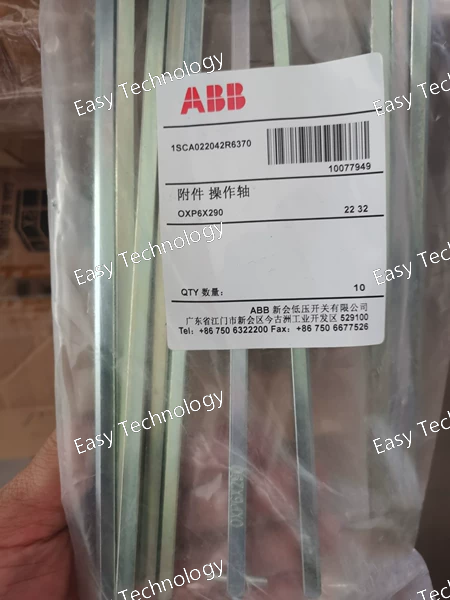
Technical Parameters
Category Parameter Specification
General Model OXP6X290
Type Addressable Fire & Gas Extinguishing Control Panel
Standards Complies with EN 12094-1, EN 54-2, EN 54-4, and other regional standards.
Electrical Supply Voltage 230 VAC, 50/60 Hz (standard). Other voltages configurable.
Battery Backup 24 VDC sealed lead-acid batteries (typically 2 x 12V in series). Capacity sized for 24-72 hours standby + alarm duration.
Power Output Provides regulated power for detectors, modules, and auxiliary devices.
Detection & Control Addressable Loops Typically 2 or more S-loop (ABB's high-speed protocol) lines. Supports up to 250 addressable devices per loop (detectors, modules, manual call points).
Extinguishing Zones 2 fully independent zones with separate abort/release, pneumatic time delays, and agent quantity.
Inputs/Outputs Extensive via add-on modules:
• Inputs: Monitor discharge pressure switches, abort/manual release stations, valve supervision.
• Outputs: Control gas cylinder valves, VESDA interfaces, door closers, fan shut-downs, NACs (sounders, beacons).
Physical & Environment Enclosure Rating Typically IP30 for indoor use.
Operating Temperature 0°C to +40°C (32°F to 104°F).
Relative Humidity Up to 95% RH, non-condensing.
Communication & Interfaces Display High-resolution color graphical LCD with multilingual support.
Control Buttons Dedicated hardware keys for menu navigation, acknowledge, silence, reset.
Event Log Non-volatile memory for minimum 3000 events.
Communication Ports RS-485 for MODBUS, BACnet MS/TP.
PROFIBUS DP (via optional module).
Ethernet (via optional module for TCP/IP).
Printer port.
Relays Built-in System Relies Fire Alarm General, Fault, Disabled, Extinguishing Zone 1 & 2 Activated, etc. (Form-C contacts).
Configuration Software Configured and commissioned using the ABB Fire Panel Suite (FPS) software on a Windows PC connected via USB or network.
The ABB OXP6X290 is a modular, addressable fire detection and gas extinguishing control panel designed for medium to large-scale installations. It serves as the central brain for protecting critical areas (e.g., server rooms, archives, switchgear rooms) by continuously monitoring for fire and, upon confirmed detection, automatically controlling the release of clean agent gas extinguishing systems.