Technical Parameters
Parameter Specification
Product Series MPT / MET Series (Thermal Overload Relay)
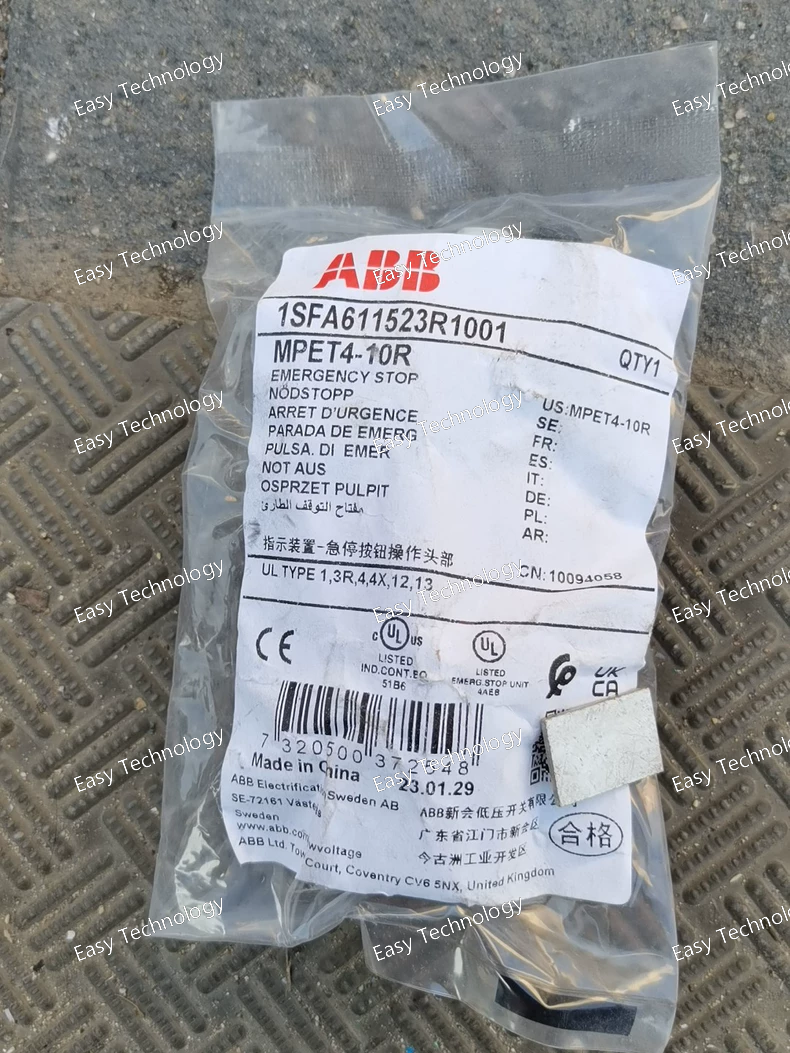
Model Decoding MPET4-10R
• MPET: Series and frame size designation.
• 4: Likely indicates the current range setting scale or frame size level (e.g., covering a specific FLA range).
• 10: Trip Class 10. This means it will trip within 10 seconds at 720% of its set current.
• R: Manual Reset operation.
Rated Operational Current (Iᵉ) Depends on the specific "4" frame. Typical range for an MPET4 is approximately 0.11A - 25A (or similar). The exact adjustable range is critical and must be verified.
Trip Class Class 10 (Standard for general-purpose motors).
Poles / Protected Phases 3 Poles (for three-phase motor protection).
Ambient Temperature Compensation Yes, typically for -20°C to +60°C.
Trip Current Adjustment Continuous dial adjustment within the relay's specified range (e.g., 0.11 - 0.16A up to 18 - 25A).
Auxiliary Contacts Typically:
• 1 NO (97-98) - Can be used for trip indication.
• 1 NC (95-96) - Connected to break the contactor coil circuit.
Configuration may vary.
Reset Mode Manual Reset (R). Requires physical push-button reset after a trip.
Mounting Direct snap-on/plug-on mounting to the side of compatible ABB contactors (e.g., AF09, AF12, AF16, etc.). Can also be mounted separately with a bus kit.
Compatible Contactors ABB A, AF, AX series of corresponding sizes.
Standards & Approvals IEC/EN 60947-4-1, UL 508, CSA C22.2 No. 14, CE, CCC.
Electrical Durability ≥ 5,000 operating cycles (at rated current).
Mechanical Durability ≥ 10,000 operating cycles.
Screw Terminals For main power (L1, L2, L3 / T1, T2, T3) and auxiliary contacts.
Insulation Voltage 690V / 1000V (Ui / Ue).
Utilization Category AC-3 (Squirrel cage motor switching).
The ABB MPET4-10R is a Miniature Thermal Overload Relay belonging to the MPT/MET series. It is a protective device designed to be installed in combination with a contactor (typically from the ABB AF series) to form a complete motor starter. Its primary function is to protect three-phase AC motors from damage caused by prolonged overload, phase imbalance, and phase loss.