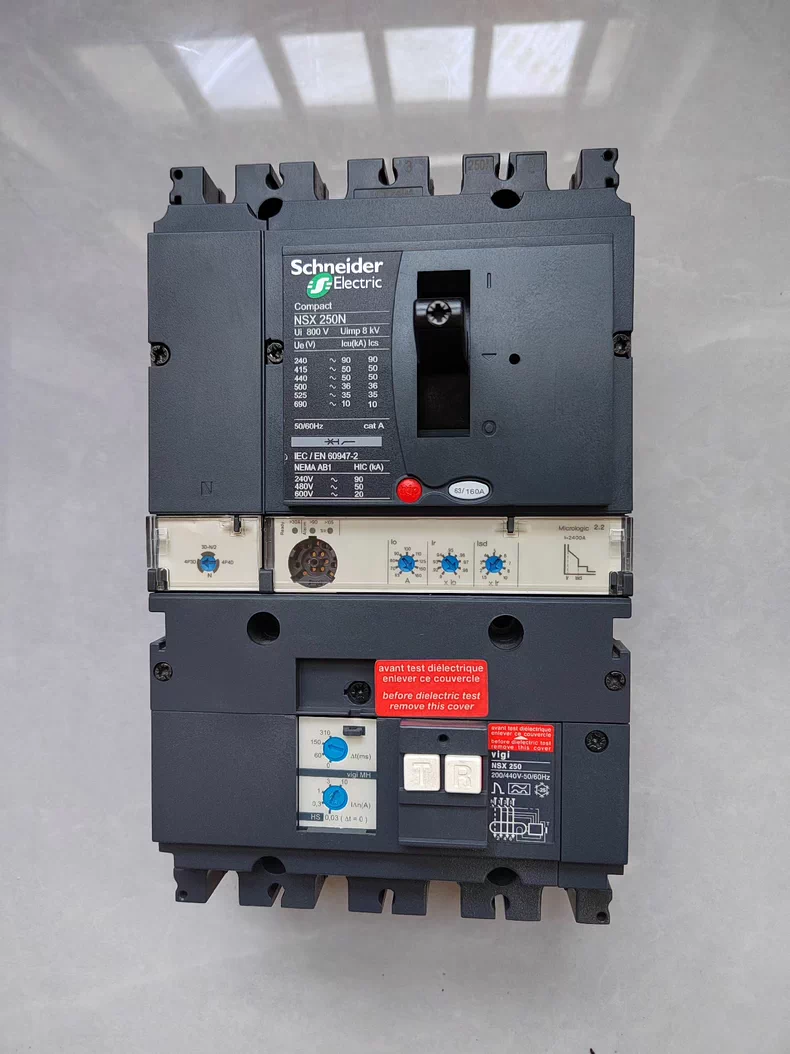
The Schneider Electric NSX250N 4P 160A 2.2 is a molded case circuit breaker (MCCB) designed for overload and short-circuit protection in three-phase electrical circuits.
Specifications
Product Type: Molded Case Circuit Breaker (MCCB)
Model: NSX250N 4P 160A 2.2
Configuration: 4P (3P + N)
Rated Current (In): 160A
Mounting: DIN rail or fixed panel mounting
Application: Overload and short-circuit protection for three-phase distribution and critical equipment
Electrical Ratings
Rated Operational Voltage (Ue): 400V AC, 50/60 Hz
Rated Insulation Voltage (Ui): 690V AC
Rated Impulse Withstand Voltage (Uimp): 8kV
Short-Circuit Withstand Capacity (Icu): 50kA
Rated Frequency: 50/60 Hz
Frequency Range: Typically rated for 50Hz or 60Hz systems
Overload and Short-Circuit Protection: Provides reliable thermal-magnetic protection
Protection Characteristics
Thermal Overload Protection: Thermal mechanism protects against sustained overloads by heating and tripping the breaker
Magnetic Short-Circuit Protection: The magnetic trip protects against instantaneous short-circuits by rapidly disconnecting the circuit
Trip Curve: C-curve for moderate inrush current tolerance (typically used for general-purpose circuits such as lighting and heating)
Adjustable Settings: Protection settings can be adjusted for the specific needs of the application, including overload and short-circuit trip values
Mechanical & Environmental
Degree of Protection: Typically IP20 (for the front face)
Housing: Compact design for easy integration in distribution panels and switchboards
Terminal Connections: Screw terminals for secure electrical connections
Mechanical Durability: Rated for 10,000 operating cycles
Operating Temperature Range: Typically -5°C to +40°C
Humidity: Suitable for standard indoor environments
Pollution Degree: Designed for general industrial and commercial use
Accessories & Options
Shunt Release: Optional for remote tripping
Auxiliary Contacts: Optional for remote status monitoring
Undervoltage Release: Available for additional undervoltage protection