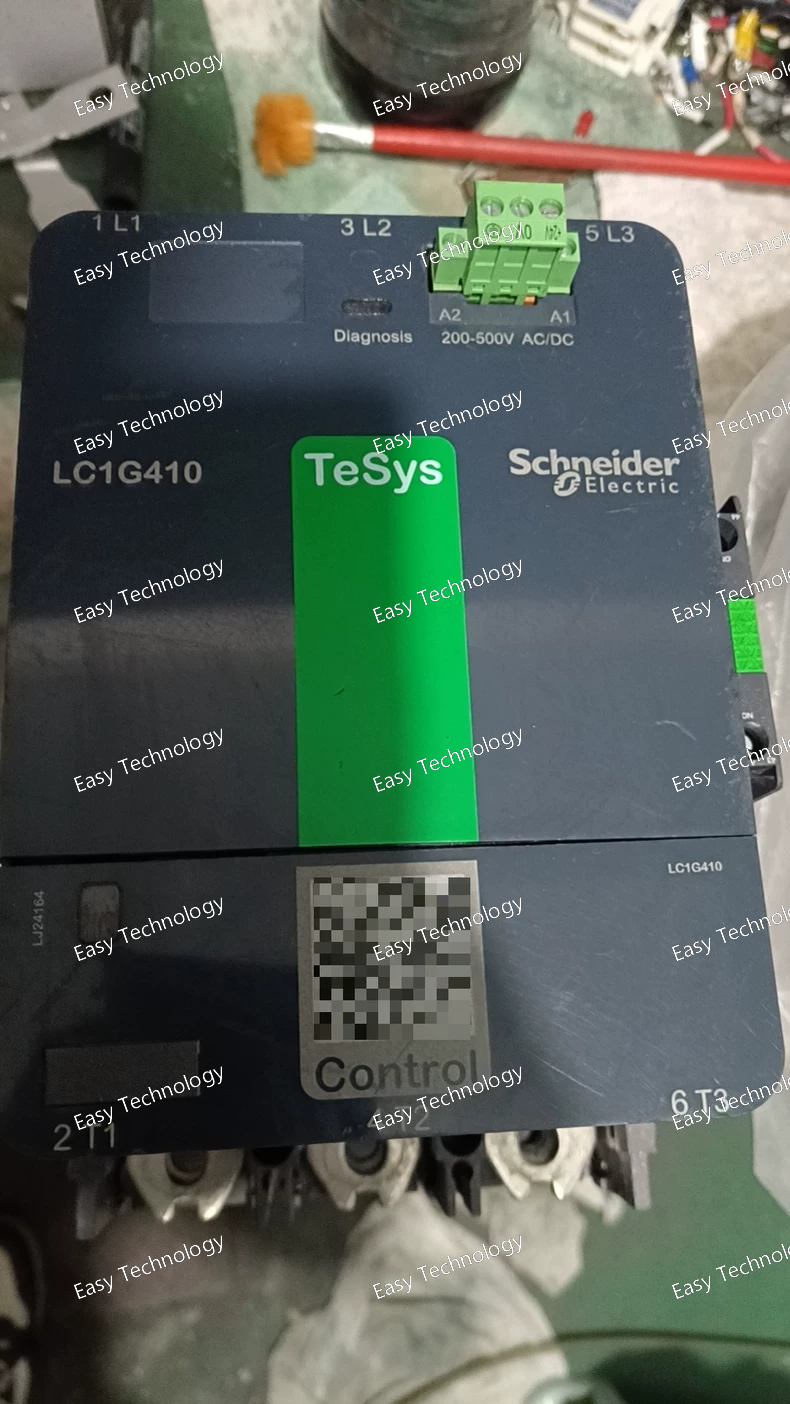
The Schneider Electric LC1G410LSEC is a heavy‑duty low‑voltage electromagnetic contactor from the TeSys Giga series, designed for high‑capacity power switching and motor control in demanding industrial and commercial applications. It features a three‑pole main contact configuration with an integrated auxiliary contact block and a wide-range AC/DC electronic control coil (200–500 V), providing reliable operation across varied control systems. The contactor is suitable for integration into automation panels, motor control centers, and power distribution systems, supporting standard utilisation categories for both AC and DC loads. It is engineered for robustness, high switching performance, and long service life.
Specifications
General
Product Family: TeSys Giga
Device Type: Electromagnetic contactor
Model: LC1G410LSEC
Number of Poles: 3 (three normally open main contacts)
Auxiliary Contact: 1 NO + 1 NC integrated
Application: Power switching and motor control in industrial systems
Utilisation Categories: AC‑1, AC‑3, AC‑3e, AC‑4, DC‑1
Electrical Ratings
Rated Operational Current (Ie): 410 A (AC‑3 duty, ≤440 V)
Rated Operational Voltage (Ue): Up to 1000 V AC / 300 V DC
Control Coil Voltage (Uc): 200 – 500 V AC/DC electronic coil
Control Voltage Operating Range: 0.8 × Uc min to 1.1 × Uc max
Rated Insulation Voltage (Ui): 1000 V AC
Rated Impulse Withstand Voltage (Uimp): ~8 kV
Network Frequency: 50/60 Hz
Performance
High Short‑Circuit Withstand: Built for robust switching at rated currents
Mechanical Life: High cycle durability
Electrical Life: Extended life under rated load conditions
Mechanical & Installation
Mounting: Panel mount compatible
Connection Terminals: Heavy‑duty screw or clamp connections
Construction: High-power main contacts with integrated auxiliary contacts for control integration
Environmental
Operating Ambient Temperature: Standard industrial range
Pollution Degree: Suitable for industrial environments
Protection Degree: IP20 for auxiliary terminals
Vibration & Shock Resistance: Engineered for industrial use